

ALS communication research
A separate NIH-supported brain-interface study helped a participant with ALS communicate. This motivates the field; it does not validate MESH.
Phyllux Innovation Commons · Taking root
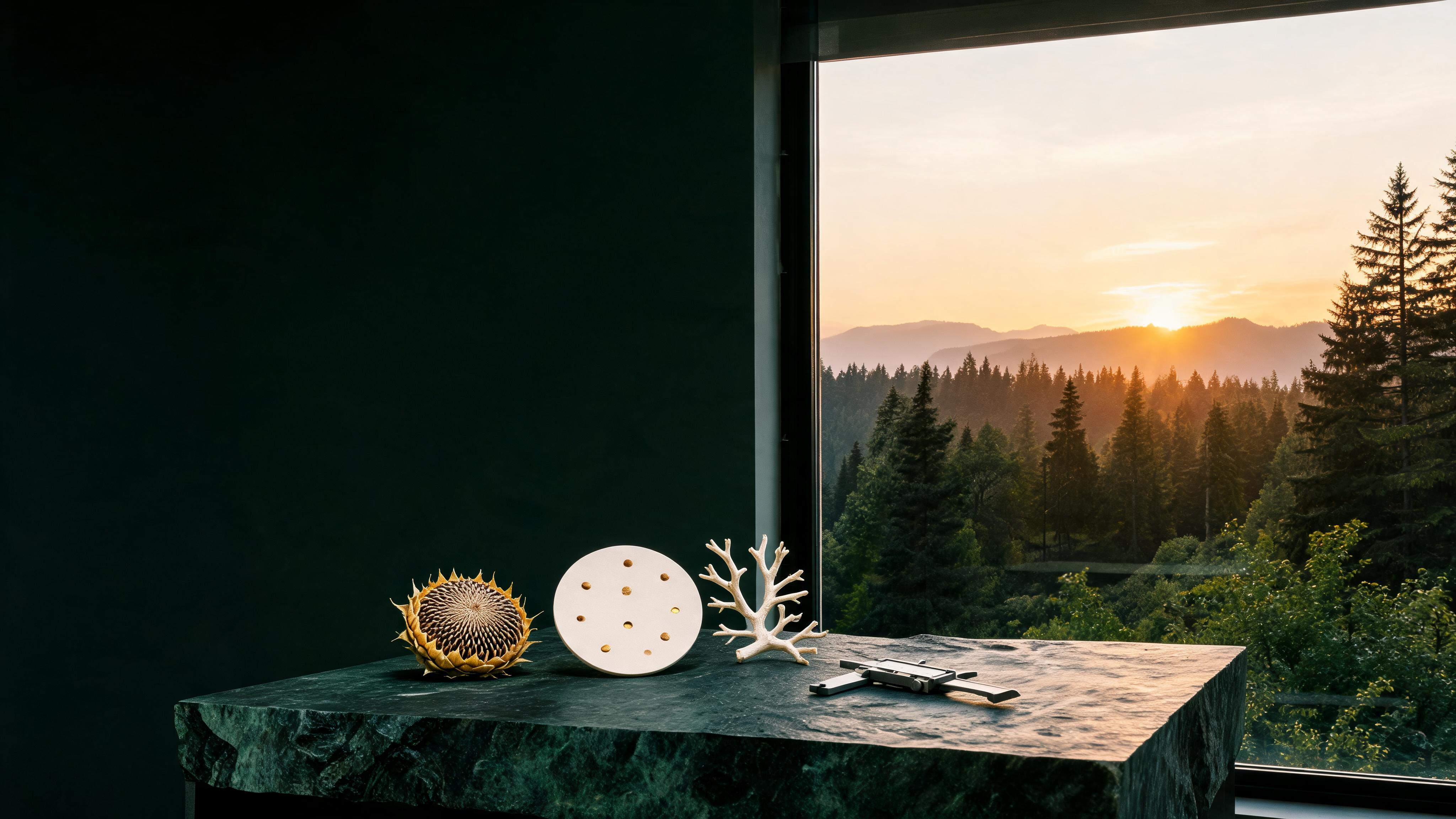
Biomimetic electrode-array research, a free geometry lab and an honest account of the work still ahead.
MESH · Early research
Can different electrode layouts offer useful tradeoffs under fair comparison constraints? No advantage is assumed.
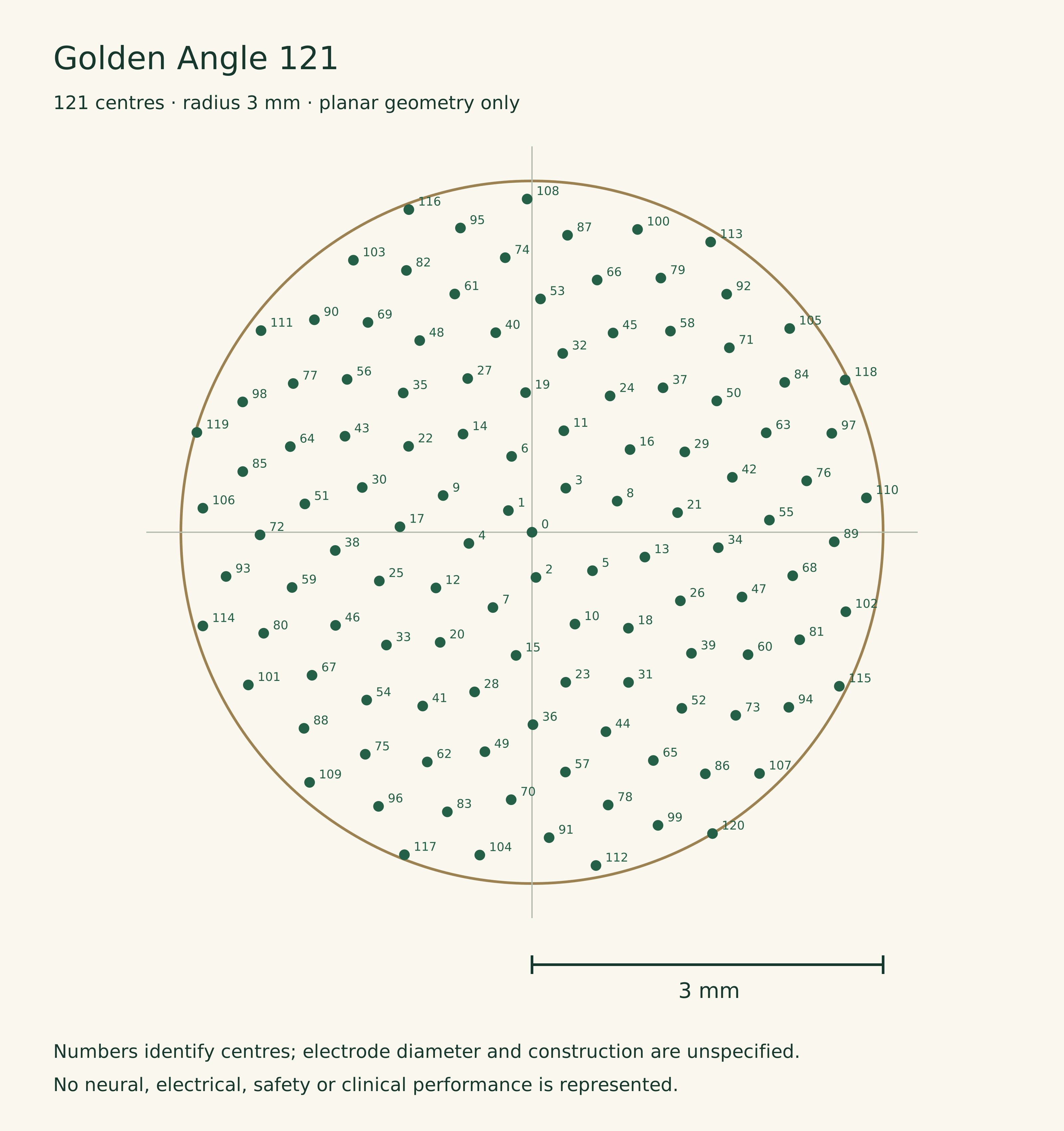
The available geometry lab defines 121 centres within a 3 mm lateral radius, explicit units, coordinates and nearest-centre distances. A square reference makes its comparison limitations clear.
No MESH treatment, implant or clinical benefit is demonstrated. The lab does not model tissue, electrical behaviour, cross-talk or neural signals.
People and purpose
People living with ALS or Parkinson’s, caregivers, clinicians and engineers can help identify useful needs. No clinical study or treatment is offered.
A separate NIH-supported brain-interface study helped a participant with ALS communicate. This motivates the field; it does not validate MESH.
Established deep-brain stimulation can ease some symptoms for selected people. A planar layout study is not an equivalent therapy.
Check calculations, improve reference comparisons, clarify needs or make documentation more accessible. Begin without personal health records.
Start with a useful question. We’ll take it from there.